Spay & Neuter Recovery: What’s Normal and What’s Not
After a spay or neuter procedure, normal recovery looks like a groggy, quiet pet who’s a little sore and not very hungry, not a pet who’s in distress, running a fever, or has an angry-looking incision. Knowing the difference is what this guide is all about. At Partners Animal Hospital Greenville, we believe a confident, informed pet owner is the best thing your pet can have during the days following surgery. Keep reading for a complete, day-by-day look at what to expect during spay and neuter recovery, which warning signs should prompt a call to our team, and exactly how to care for your pet at home so they heal quickly and comfortably.
What Happens During a Spay or Neuter Procedure?
Before diving into spay and neuter recovery, it helps to understand what your pet actually goes through. A spay (ovariohysterectomy) is the surgical removal of a female animal’s ovaries and uterus. A neuter (orchiectomy) is the surgical removal of a male animal’s testicles. Both procedures are performed under general anesthesia and are among the most commonly performed surgeries in veterinary medicine.
At Partners Animal Hospital Greenville, our surgical team follows strict anesthetic monitoring and safety protocols throughout your pet’s procedure. Pets are monitored closely as they wake from anesthesia and are typically ready to go home the same day. Your veterinarian will provide discharge instructions specific to your pet before they leave our care.
What’s Normal in the First 24 to 48 Hours of Spay or Neuter Recovery
The first two days of spay and neuter recovery are typically the most uncomfortable for your pet. Knowing what’s expected helps you stay calm and respond appropriately if something doesn’t look right.
Normal signs in the first 24 to 48 hours after a spay or neuter include:
- Grogginess and lethargy: Anesthesia takes time to fully clear the system. Your pet may seem sleepy, wobbly, or unsteady for several hours after returning home. This is expected.
- Reduced appetite: It’s common for pets to have little interest in food on the day of surgery. Offer a small amount of food in the evening and don’t be alarmed if they don’t eat much.
- Mild swelling at the incision site: A small amount of swelling and pinkness around the incision is a normal part of the healing response, not a sign of infection.
- Some whimpering or restlessness: Mild discomfort is expected and your veterinarian will send your pet home with appropriate pain medication.
- A small amount of blood-tinged discharge: A minimal amount of serosanguinous (light pink or blood-tinged) fluid at the incision site in the first 24 hours is generally normal.
How Long Does Spay and Neuter Recovery Take?
Most pets recover well within 10 to 14 days. Neuter recovery tends to be slightly faster than spay recovery because the spay is a more invasive abdominal procedure. Full internal healing, however, takes longer than external healing, typically four to six weeks. This is why activity restrictions remain in place even after the incision appears healed on the outside.
Spay and Neuter Recovery: Day-by-Day Expectations
Recovery from a spay or neuter procedure follows a general progression, though individual pets vary. Here’s a rough timeline of what to expect as your pet heals.
Days 1 to 3: Rest and Restriction
Your pet should be kept calm and quiet. Confine them to a small, comfortable space to prevent jumping, running, or roughhousing. Keep them away from stairs if possible. Continue pain medication as prescribed and check the incision site twice daily. Your pet should be eating and drinking by day two, even if their appetite is reduced.
Days 4 to 7: Gradual Improvement
Most pets begin to feel significantly better by day four or five of spay and neuter recovery. They may start acting like their normal selves, which can make enforcing activity restrictions challenging. It’s important to maintain restrictions even when your pet seems fine. Internal tissues are still healing and premature activity can cause complications like incision dehiscence (reopening).
Days 8 to 14: Incision Healing and Activity Transition
The external incision should appear noticeably healed by day ten to fourteen. If your pet had skin sutures or staples, their follow-up appointment at Partners Animal Hospital Greenville typically falls in this window for removal. If your pet had internal (dissolvable) sutures, no removal is needed. Continue to monitor the incision site and contact us if you have any concerns.
Warning Signs: When to Call Partners Animal Hospital Greenville
Most pets recover without complications, but it’s important to know which signs during spay and neuter recovery warrant a phone call or urgent visit to your veterinarian. Catching a complication early leads to better outcomes.
Contact Partners Animal Hospital Greenville promptly if you notice any of the following after your pet’s spay or neuter:
- Excessive swelling, redness, or heat at the incision site: Some is normal; significant or worsening inflammation suggests infection
- Discharge that is green, yellow, or foul-smelling: Clear or lightly blood-tinged fluid in the first day can be normal, but purulent discharge is not
- Incision opening or gaping: Any separation of the wound edges requires immediate veterinary attention
- Pale gums: A sign of potential internal bleeding that should be treated as an emergency
- Lethargy beyond the first two days: Persistent fatigue or failure to improve can signal a complication
- Vomiting, loss of appetite, or refusal to drink past day two: Some is expected initially, but prolonged symptoms need evaluation
- Signs of severe pain or distress: Including crying, inability to get comfortable, or guarding the abdomen
- Excessive licking or chewing at the incision: This can open the wound and introduce infection
Activity Restrictions During Spay and Neuter Recovery
One of the most common sources of post-operative complications is pets doing too much too soon. Activity restrictions exist because internal healing lags behind external healing, even if the skin looks fine, the deeper tissues may not be ready for stress.
Standard activity restrictions during spay and neuter recovery include:
- No running, jumping, or rough play for at least 10 to 14 days
- No swimming or bathing until the incision is fully healed and cleared by your veterinarian
- Leash walks only for dogs; short, calm outings for bathroom purposes only during the first week
- Confine cats to a small room or crate to prevent leaping onto furniture or other high surfaces
- Separate from other pets if play or pestering is likely
Should My Pet Wear a Cone After Surgery?
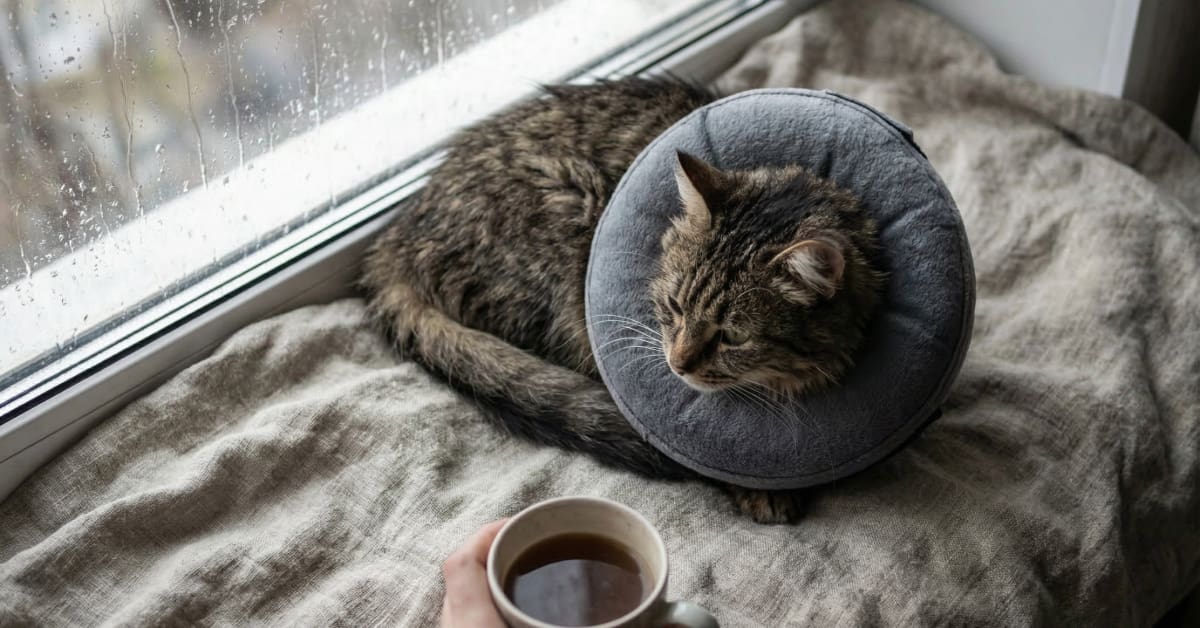
Yes, and this is non-negotiable for most pets. An Elizabethan collar (e-collar or cone) prevents your pet from licking, chewing, or scratching at the incision. Even brief contact with the surgical site can introduce bacteria and cause infection or open the incision. The cone should stay on at all times when you cannot directly supervise your pet. Alternatives like soft recovery collars or surgical recovery suits may be appropriate for some pets. Ask your veterinarian at Partners Animal Hospital Greenville what’s right for yours.
Caring for the Incision Site at Home
Proper incision care is a key part of successful spay and neuter recovery. Check the incision twice daily for the first week. You’re looking for signs of normal healing: the edges should be closed and together, with mild pink tissue around them. Some bruising around a male dog’s neuter site is normal due to the location and nature of the surgery.
Do not apply any ointments, creams, or antiseptics to the incision unless specifically directed by Partners Animal Hospital Greenville. Do not allow the site to get wet. If you’re unsure whether what you’re seeing is normal, take a photo and call us. We’re happy to help you assess it without an unnecessary trip in.
Setting Your Pet Up for a Smooth Recovery
The post-operative period is an important time, and your attentiveness makes a real difference in how smoothly your pet heals. Follow the discharge instructions provided by Partners Animal Hospital Greenville, give all prescribed medications on schedule, and don’t hesitate to call our team if something doesn’t look right.
Spay and neuter recovery is temporary. With the right care and a little patience, most pets bounce back quickly and go on to live longer, healthier lives as a result of these procedures. If you have questions before or after your pet’s surgery, our team at Partners Animal Hospital Greenville is always here to help. Call us at (864) 743-1419 or book an appointment online today.
Recent Posts
About Us
At Partners Veterinary Group, we believe in energizing our team members through shared values, while helping them create value for our clients and patients. Knowing we can help make pets’ and people’s lives better motivates us to continually strive for excellence and love what we do.
Our team consistently works to build educational, supportive, and cooperative work environments that cater to positive experiences and professional growth. We’re constantly evolving, creating innovative ways to deliver cutting-edge medicine to our patients. We equip our teams with tools to enhance their skills and improve their knowledge.