
Loose Teeth in Dogs: Causes, Treatment, and When Extraction Is Needed
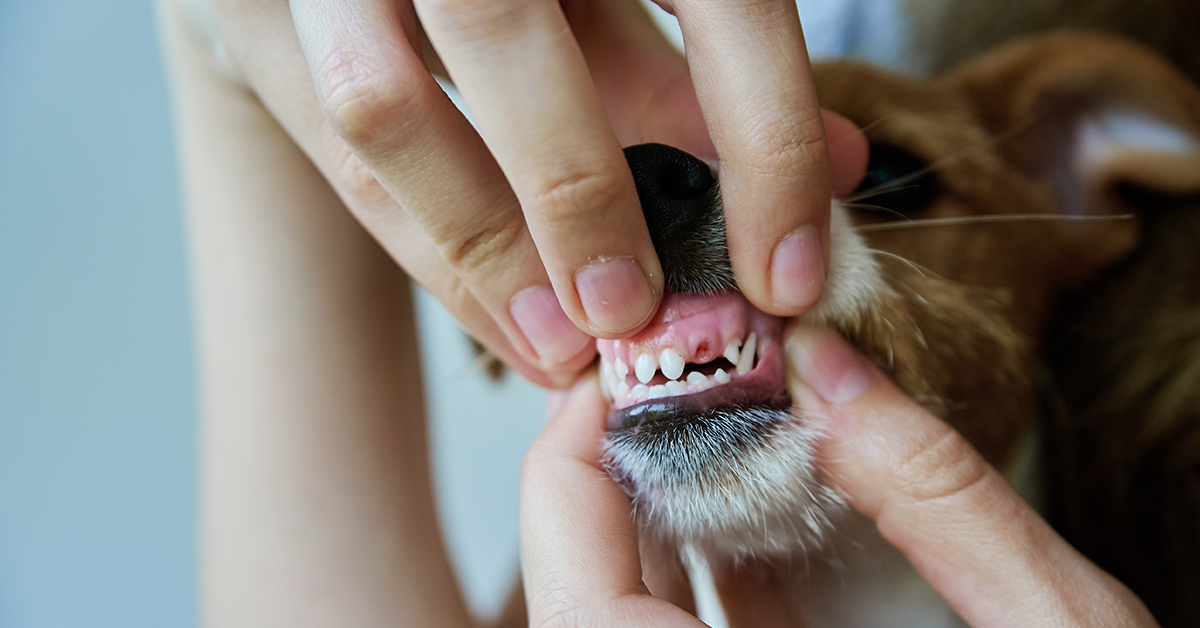
Loose teeth in dogs are most often caused by periodontal disease, though trauma and other oral conditions can also weaken the structures that hold teeth in place. Unless your dog is a puppy losing baby teeth, a wobbly tooth is never normal and deserves a veterinary exam. Adult teeth should sit firmly in the jaw, so movement usually signals infection, bone loss, or injury below the gumline. Many dogs continue eating and playing despite the discomfort, which means owners often discover the problem by accident while brushing or handling their dog’s mouth. At Partners Animal Hospital in Greenville, SC, we evaluate loose teeth regularly and help families understand what’s behind them. In this article, we’ll cover what causes teeth to loosen, how to recognize the warning signs, the treatment options available, and how your veterinarian decides when a tooth needs to come out.
What Causes Loose Teeth in Dogs?
Most loose teeth in dogs trace back to a breakdown of the gums, ligaments, and bone that anchor each tooth to the jaw.
Periodontal Disease
Periodontal disease is by far the leading cause of loose teeth in dogs. It starts with plaque, a sticky film of bacteria that forms on teeth after eating. When plaque hardens into tartar, bacteria spread beneath the gumline and trigger inflammation. Over time, that infection destroys the periodontal ligament and the surrounding bone. As support disappears, the tooth begins to shift and eventually becomes mobile. Because this process happens slowly and mostly out of sight, many dogs have significant bone loss before their owners notice anything unusual.
Trauma and Injury
A blow to the face, a fall, a car accident, or rough play can loosen a healthy tooth. Dogs who chew on rocks, hard bones, or metal objects may also damage the ligament that holds a tooth in its socket. Trauma-related looseness sometimes comes with a fracture, bleeding gums, or swelling.
Other Contributing Factors
Beyond gum disease and injury, several other issues can play a role:
- Oral tumors that erode the bone around the tooth roots
- Tooth root abscesses that weaken support from below
- Crowded teeth in small breeds that trap bacteria and speed up gum disease
- Metabolic or hormonal conditions that affect bone health
- Advanced age combined with years of untreated tartar buildup
It’s worth noting that puppies naturally lose their baby teeth between about three and seven months of age. A loose tooth in a young puppy is usually part of normal development, though baby teeth that stay put after the adult teeth arrive should be checked by your veterinarian.
Which Dogs Face the Highest Risk?
Any dog can develop dental problems, but loose teeth in dogs show up most often in toy and small breeds such as Yorkshire terriers, Maltese, Pomeranians, and Chihuahuas. Their teeth are packed tightly into small jaws, and the bone supporting each tooth is thinner than in larger breeds. Senior dogs are also at greater risk, especially if they haven’t had regular professional cleanings. Greyhounds and other sighthounds are known for aggressive gum disease as well. If your dog belongs to one of these groups, routine exams are one of the best ways to catch a loose tooth before the damage becomes severe.
How Can You Tell if Your Dog Has a Loose Tooth?
Spotting a loose tooth in a dog can be tricky, because the signs often blend into everyday behavior.
Changes You Might Notice at Home
Pay attention to these potential red flags:
- A tooth that looks tilted, longer than its neighbors, or out of line
- Gums that appear to be pulling away from the teeth
- Pink-tinged saliva or spots of blood on toys and bedding
- A sour or rotten smell from the mouth
- Hesitation when picking up kibble or chewing treats
- Pawing at the mouth or sudden head shyness
Why a Professional Exam Matters
Some tooth mobility is subtle enough that only a veterinarian can detect it with proper instruments. Avoid wiggling or pushing on a tooth you suspect is loose, since this can cause pain and may lead to a bite. During an exam, your veterinarian gently checks each tooth, measures gum pockets, and looks for swelling or infection. Dental X-rays taken under anesthesia then reveal how much bone remains around the roots, which is the key to understanding the severity.
Grading Tooth Mobility
Veterinarians often grade tooth mobility on a scale. Slight movement may indicate early disease, while a tooth that moves in several directions usually has lost much of its bony support. These grades, combined with X-ray findings, guide every treatment decision your veterinary team makes.
What Treatment Options Are Available for Loose Teeth in Dogs?
Treatment if your dog has a loose tooth depends on the underlying cause, how much support the tooth has lost, and your dog’s overall oral health.
Professional Dental Cleaning
When looseness is mild and caused by early periodontal disease, a thorough cleaning under anesthesia may be the first step. Scaling above and below the gumline removes the tartar and bacteria that drive inflammation. In some cases, reducing infection allows the gums to tighten around the tooth and slows further bone loss.
Periodontal Therapy
For teeth with moderate disease, your veterinarian may recommend additional periodontal treatment. This can include deep cleaning of the root surfaces, placement of an antibiotic gel into gum pockets, or advanced procedures performed by a veterinary dental specialist. The goal is to save teeth that still have enough healthy bone to remain functional.
Stabilization After Trauma
When a healthy tooth loosens from an injury, prompt care sometimes makes it possible to stabilize the tooth with splinting while the ligament heals. Timing matters a great deal with trauma, so contacting your veterinarian quickly after an accident gives your dog the best chance of keeping the tooth.
Ongoing Monitoring
After treatment, regular dental exams help your veterinarian track whether the tooth stays stable. Dogs with a history of periodontal disease often need professional cleanings more frequently to prevent a loose tooth from becoming a recurring problem.
When Does a Loose Tooth Need to Be Extracted?
Extraction becomes the best choice when a tooth can no longer be saved or when keeping it would cause ongoing pain and infection.
Signs Extraction Is the Right Call
Your veterinarian may recommend removing a tooth when dental X-rays show severe bone loss around the roots, when the tooth moves significantly in multiple directions, or when infection has spread to the root tip. Teeth affected by advanced disease rarely regain stability, and leaving them in place allows bacteria to keep damaging the jaw and nearby teeth. Retained baby teeth that crowd adult teeth are also common candidates for extraction.
What Happens During an Extraction
Dental extractions in dogs are performed under general anesthesia with careful monitoring and pain control. Many canine teeth have two or three roots, so your veterinarian may section a tooth to remove each root completely. The site is cleaned and often closed with dissolvable stitches. Your veterinary team will provide clear discharge instructions and recheck the area as it heals.
How Dogs Adjust Afterward
Owners often worry about how their dog will eat with fewer teeth. Fortunately, dogs adapt remarkably well, even after multiple extractions. Removing painful a painful loose tooth in a dog frequently leads to a better appetite, more energy, and a happier disposition, because the source of chronic discomfort is finally gone.
Protect Your Dog’s Smile With Partners Animal Hospital
Loose teeth in dogs are a sign that something deeper is happening in the mouth, and early attention can make the difference between saving a tooth and losing it. Regular dental exams, professional cleanings, and prompt care after any injury all help preserve the structures that keep teeth firmly in place. If you’ve noticed a wobbly tooth, bleeding gums, bad breath, or changes in how your dog eats, the team at Partners Animal Hospital in Greenville, SC, is ready to help. We offer complete oral evaluations, digital dental X-rays, cleanings, and extractions with attentive anesthesia monitoring and pain management. Call us at (864) 743-1419 to schedule your dog’s dental exam, and let us help your companion chew, play, and smile comfortably again.
Recent Posts
About Us
At Partners Veterinary Group, we believe in energizing our team members through shared values, while helping them create value for our clients and patients. Knowing we can help make pets’ and people’s lives better motivates us to continually strive for excellence and love what we do.
Our team consistently works to build educational, supportive, and cooperative work environments that cater to positive experiences and professional growth. We’re constantly evolving, creating innovative ways to deliver cutting-edge medicine to our patients. We equip our teams with tools to enhance their skills and improve their knowledge.